
The Art of Musical Expression: Mastering Tempo and Dynamics

Otamere Osarodion
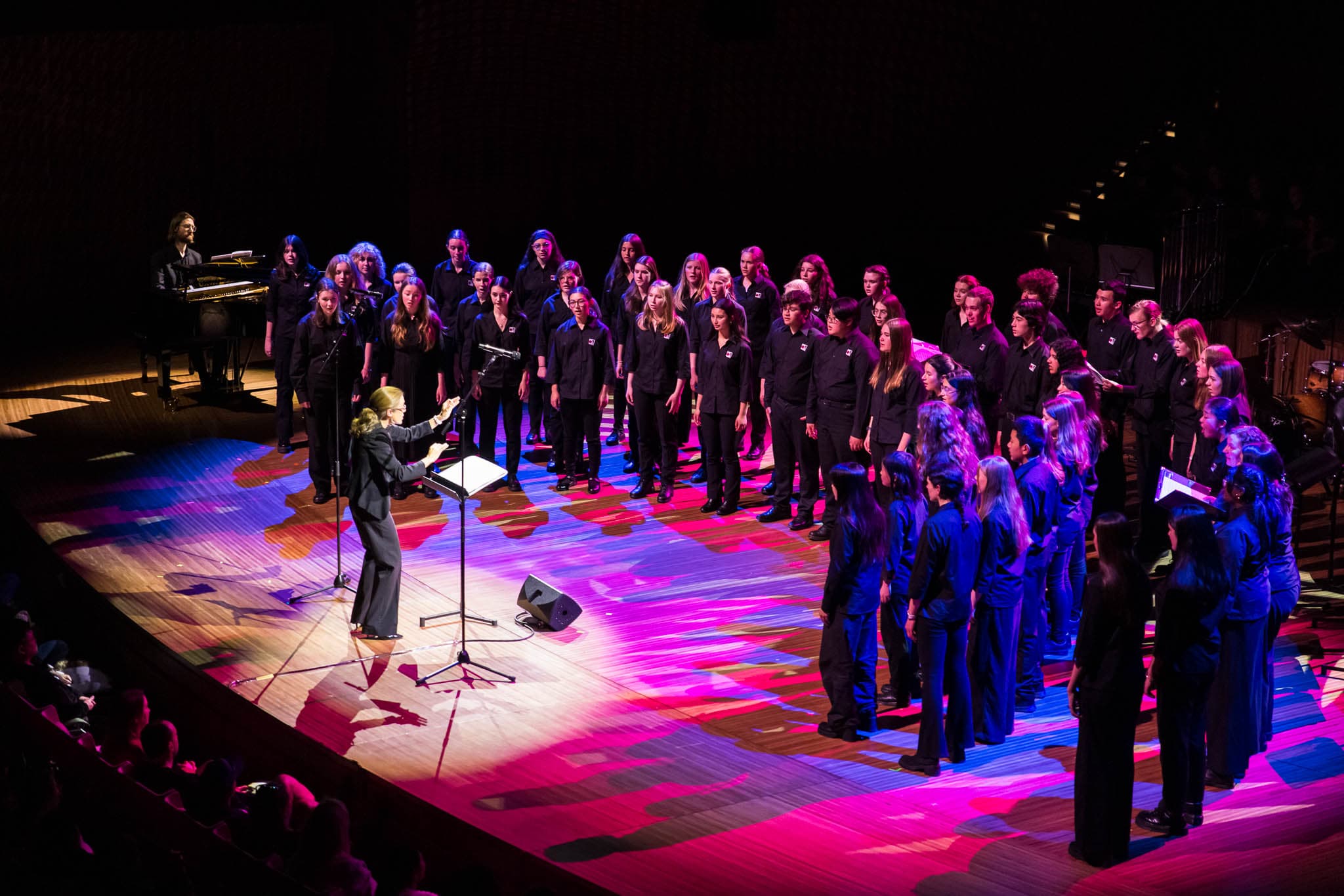
Musical notation provides the blueprint, but the performer breathes life into the architecture. Among the most powerful tools a musician possesses to transform mechanical notes into raw human emotion are dynamics (the variation of volume) and tempo rubato (the flexible manipulation of time).
When used in tandem, these techniques bridge the gap between rigid notation and profound artistic communication.
1. The Evolution of Tempo Rubato: "Stolen Time"
Derived from the Italian phrase for "stolen time," rubato allows performers to deviate from a strict, metronomic pulse to emphasize emotional high points (Hudson, 1994). However, the definition of what is being "stolen"—and how it is "paid back"—has shifted dramatically across musical eras.
The 18th Century: Melodic Displacement
In the Baroque and Classical eras, rubato was primarily contrametric. The soloist or singer would freely displace, lengthen, or shorten note values in an improvisatory manner, while the accompaniment maintained a strictly unyielding, steady beat.
The Golden Rule: Master musicians like C.P.E. Bach and Leopold Mozart fiercely guarded this balance, warning that if the accompaniment wavered alongside the melody, the expressive illusion would be completely demolished (Hudson, 1994).
The 19th Century: Romantic Expansion
As the Romantic era blossomed, rubato expanded into structural or agogic rubato, where the acceleration and deceleration applied to the entire musical texture simultaneously.
Chopin’s Hybrid Style: Frédéric Chopin bridged the old and new worlds. He famously demanded that his students keep the left-hand accompaniment in strict time (acting as a conductor) while the right-hand melody lingered or anticipated the beat (Eigeldinger, 1986). However, he also utilized full-texture rubato to heighten the drama of his compositions.
The Agogic Accent: In 1884, music theorist Hugo Riemann introduced the term agogic to describe emphasis achieved not by playing a note louder, but by lingering on it slightly longer—a foundational element of late-Romantic interpretation (Riemann, 1884).
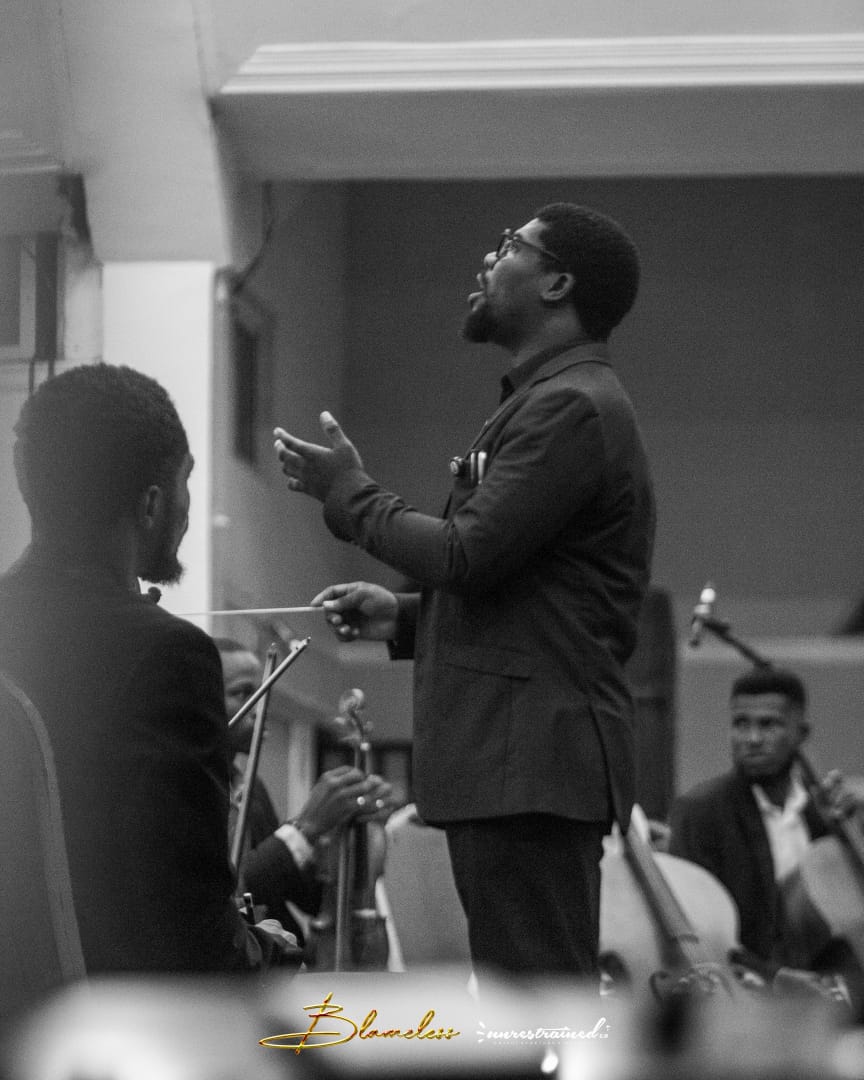
The 20th Century: The "Paying Back" Debate
By the early 1900s, a fierce debate emerged regarding the Balance Theory:
[Time Stolen: Accelerando] ───► Must Balance ───► [Time Repaid: Rallentando]
Traditionalists argued that time "stolen" via an accelerando must be meticulously "paid back" via a rallentando within the same measure so the overall bar length remained constant.
Conversely, piano legends like Ignacy Jan Paderewski rejected this mathematical constraint, famously stating that "what is lost is lost" and arguing that genuine emotion should never be bound by metronomic restitution (Paderewski, 1909).
Modern Practice and Moderation
In the mid-20th century, modernists like composer Igor Stravinsky and conductor Arturo Toscanini led a fierce backlash against what they viewed as the "exaggerated, self-indulgent" rubato of the late Romantics, advocating for strict adherence to the score (Taruksin, 1995).
Today, modern performers strike a balance: rubato is applied broadly to any expressive rhythmic irregularity, combining historical "agogic elasticity" with respect for the text.
2. Rubato vs. Freedom: Understanding the Markings
Composers use several terms to grant rhythmic freedom to a performer. While often used interchangeably today, historically they carried distinct nuances. Stolen time"Implies an artful, judicious "theft" of time, traditionally balanced by a steady accompaniment or eventual time restitution. Ad libitum"At liberty" gives Broad permission to alter tempo, omit parts, or improvise without any expectation of "paying back" the time. A piacere"At pleasure" Gives the performer total freedom to execute a passage according to their personal taste. A capriccio" At the caprice"Signals a whimsical, unpredictable departure from the steady pulse.
Early 20th-century music dictionaries cautioned against confounding rubato with ad libitum. While ad libitum suggests total, unmapped liberty, rubato is viewed as a highly disciplined, "artful license" used to breathe life into an execution without destroying its structural integrity.
3. Pushing the Boundaries: Extreme Dynamics
Dynamics dictate the relative volume of a piece, stretching from pianississimo (ppp) to fortississimo (fff). Because these markings are inherently relative rather than fixed decibel levels, their execution depends heavily on the instrument, the register, and the room's acoustics (Rosen, 2002).
Starting in the late 1800s, composers began demanding extreme, almost impossible ranges of volume to shock or hypnotize listeners.
[SOFTEST] ── pppppppppp ── ppp ── p ── [RELATIVE MIDDLE] ── f ── fff ── ffffffffff ── [LOUDEST]
Engineering Extreme Loudness (Fortissimo)
To achieve earth-shattering volume, composers combine dense orchestration with unconventional performance instructions:
Gustav Holst & Igor Stravinsky: Both deployed ffff for maximum dramatic impact—Holst punctuated the cosmos with an organ in The Planets, while Stravinsky used it to close The Firebird Suite.
Gustav Mahler: In his Seventh Symphony, he marked the cellos and basses at an astonishing fffff, writing an explicit instruction for the musicians to "pluck the string so hard that it hits the wood."
The Avant-Garde: György Ligeti pushed notation to its absolute limits, marking a passage in his Piano Étude No. 13 as ffffffff(8 fortes) and famously demanding ffffffffff (10 fortes) alongside the strike of a physical hammer in his opera Le Grand Macabre (Steinitz, 2003).
Cultivating Extreme Softness (Pianissimo)
Extreme quietude is often weaponized to create intense intimacy or subvert expectations:
Pyotr Ilyich Tchaikovsky: In his Pathétique Symphony, he subverted the bassoon's natural capabilities by marking a solo at an ultra-whisper of pppppp (6 pianos).
Giuseppe Verdi: His opera Otello utilizes an incredibly delicate ppppppp (7 pianos) to draw the audience into absolute silence.
György Ligeti: Keeping with his love for extremes, his Cello Concerto begins at the threshold of audibility: pppppppp (8 pianos) (Steinitz, 2003).
4. The Human Element in Modern Interpretation
In our modern digital landscape, computers and Artificial Intelligence can flawlessly replicate rhythms and map dynamics to MIDI velocity values (ranging from 0 to 127). Yet, a perfectly quantized performance often feels sterile. True musical interpretation relies on the inimitable "human touch" (Williamon, 2004).
The Psychology of Live Performance
Modern performance theory suggests that a great interpretation is born from a psychological friction within the performer:
The Fixed vs. Emergent Self: A performance is a conflict between the "fixed self" (the highly disciplined, rehearsed version of the musician) and the "emergent self" (the spontaneous identity that reacts to the immediacy, acoustics, and pressure of the live concert moment) (Rink, 2002).
The Power of Silence: Human musicians understand that intentional silence is not just "empty space." It is an active interpretive tool used to generate suspense, frame a musical phrase, and give the audience room to process emotional weight.
Turning Anxiety into Art: The ONT Method
Recent research into performance psychology has yielded innovative techniques like the Observe, Narrative, Trigger (ONT) method (Williamon, 2004). Instead of fighting Music Performance Anxiety (MPA), the ONT method trains professional performers to use their physical anxiety symptoms as a psychological guide.
By embracing the "anxious self" rather than suppressing it, musicians can discover hidden interpretive desires in real-time. This shifts the performance away from a safe, "mechanical execution" and into a deeply vulnerable, uniquely authentic piece of live storytelling.
References
Eigeldinger, J.-J. (1986). Chopin: Pianist and teacher as seen by his pupils. Cambridge University Press.
Hudson, R. (1994). Stolen time: The history of tempo rubato. Clarendon Press.
Paderewski, I. J. (1909). Tempo rubato. In H. T. Finck (Ed.), Success in music and how it is won. Charles Scribner's Sons.
Riemann, H. (1884). Musikalische dynamik und agogik: Lehrbuch der musikalischen phrasirung. D. Rahter.
Rink, J. (Ed.). (2002). Musical performance: Studies in expression and synthesis. Cambridge University Press.
Rosen, C. (2002). Beethoven's piano sonatas: A short companion. Yale University Press.
Steinitz, R. (2003). György Ligeti: Music of the imagination. Northeastern University Press.
Taruskin, R. (1995). Text and act: Essays on music and performance. Oxford University Press.
Williamon, A. (Ed.). (2004). Musical excellence: Strategies and techniques to enhance performance. Oxford University Press.